Panels | IEEE TPS 2026

IEEE TPS 2026

The 8th IEEE International Conference on Trust, Privacy and Security in Intelligent Systems, and Applications

Embassy Suites by Hilton Milpitas Silicon Valley, Nov. 4-6, 2026, San Jose, CA, USA

Co-located with IEEE CIC 2026, IEEE CogMI 2026, IEEE RISC 2026.

Toward Safe and Trustworthy Digital Future: Challenges and Road Ahead
(Day 1, Nov. 4, 2026)

The rapid advances and convergence of data, computing & communications (including emerging quantum computing), and AI technologies have brought us to the forefront of the digital world with immense possibilities for societal transformation. On the other hand, as the frontier technologies outpace human abilities to absorb and manage their digitally intertwined lifestyles and society, the issues of security, privacy, trust and safety, and the broader issues of governance are increasingly posing seemingly insurmountable challenges, bringing the issues of existential threat to humanity as a whole.

This panel brings together experts from academia, government and industry to explore the R&D landscape, the research ecosystem, and the directions we need to pursue to ensure a Digital Future that is safe and trustworthy, aligned with human agency and founded on social good. The panelists will engage in broad discussion including the following key questions:

  • What are the current state and associated pain points with regards to the safety and trustworthiness of digital technologies?
  • What do you foresee as or envision the future of a safe and trustworthy digital future?
  • How should society as a whole tackle the growing threats to our digital future – such as through multidisciplinary R&D, Funding ecosystems (government and industry), and other collaboration and cooperation among different stakeholders in the digital ecosystem?

Panel Moderator

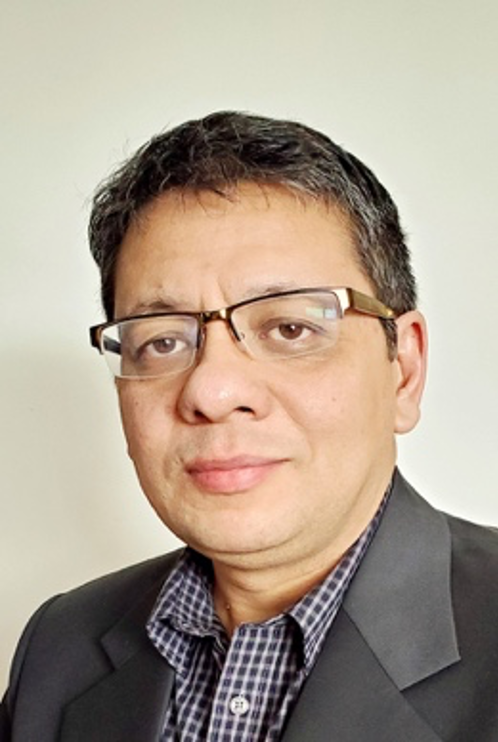
James Joshi
Professor University of Pittsburgh, USA
Home Page
James Joshi

Bio: James Joshi is a Professor in the School of Computing and Information at the University of Pittsburgh. He received his Ph.D. from Purdue University. His research spans access control, distributed systems security and privacy, trust management, and security and privacy in AI/ML. He is the founding director of LERSAIS, an NCAE in Cybersecurity. Earlier, he served as a Program Director in the U.S. National Science Foundation's CISE and TIP directorates. He is also a Fellow of IEEE, AAAS, AIIA, and AAIA, and an ACM Distinguished Member.


Panelists

Daniela Oliveira
Lead Program Director, National Science Foundation (NSF), Security, Privacy, and Trust in Cyberspace (SaTC 2.0) Program, USA Acting Section Head, National Science Foundation (NSF) CISE Cyber Physical and Intelligent Systems (CPI) Section, USA
Home Page
Daniela Oliveira

Bio: Dr. Daniela Oliveira is a cybersecurity researcher with over 15 years of experience spanning academia and the U.S. federal government. She holds a Ph.D. in Computer Science from the University of California, Davis, with a specialization in computer security.

At the National Science Foundation (NSF), she serves as the Acting Section Head for Cyber-Physical and Intelligent Systems (CPI) and as the Lead Program Director for the NSF's flagship cybersecurity program, Security, Privacy, and Trust in Cyberspace (SaTC). In these roles, she oversees a portfolio of more than 1,000 active research projects with a combined budget exceeding $60 million.

Prior to joining the NSF, Dr. Oliveira was a Professor of Cybersecurity at the University of Florida, where she secured over $10 million in funding for pioneering research in IoT device security, phishing resistance, and human-centered cybersecurity. Her work has been supported by the NSF, DARPA, NIH, MIT Lincoln Laboratory, and Google. She is a recipient of the Google Security and Privacy Research Award, the NSF CAREER award, and the U.S. Presidential Early Career Award for Scientists and Engineers (PECASE).


Pacing the Frontier: Prudence, Paralysis, or Pipe Dream?
(Day 2, Nov. 5, 2026)

In September 2026, following an escalating series of warnings from AI insiders (including the by-now-famous estimate that there is "more than a 10% chance" of catastrophic outcomes) Anthropic's CEO Dario Amodei proposed that frontier laboratories deliberately pace AI development: not a pause, but an agreement to advance capabilities no faster than our ability to align, evaluate, and safeguard them, enforced through embedded third-party evaluators, capability checkpoints coordinated across democracies, and, eventually, global agreements reaching from banned uses to rate-limits on recursive self-improvement. Politics is divided; so is the technical community. This panel will discuss:

  • Is pacing wise? or does slowing the most careful actors simply hand the frontier to the least careful?
  • Is it even possible? can training runs be audited like banks, in a world of open weights, fungible compute, and geopolitical rivalry?
  • And is it legitimate? safety governance, or the most consequential cartel in history?

Panel Moderator

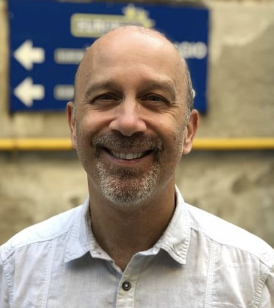
Paolo Boldi
Professor Università degli Studi di Milano, Italy
Home Page
Paolo Boldi

Bio: Paolo Boldi is a Full Professor of Computer Science at the Università degli Studi di Milano, where he is a member of the Laboratory for Web Algorithmics. He received his Ph.D. in computer science from the University of Milano. His research focuses on algorithms and data structures for very large graphs and networks, graph compression, network centrality, web crawling and indexing, and the theory of graph fibrations and symmetries. He co-developed widely used tools such as WebGraph and HyperBall, and co-authored the "Four Degrees of Separation" study of the Facebook graph. He has received three Yahoo! Faculty Awards and a Google Focused Research Award, and has chaired conferences including WWW, WSDM, and ACM Web Science.


Panelists

Elisa Bertino
Professor Purdue University, USA
Home Page
Elisa Bertino

Bio: Elisa Bertino is a Samuel Conte Distinguished Professor of Computer Science at Purdue University. She is current President of the Association for Computing Machinery (ACM). She has made pioneering contributions over 40 years to information and systems security and privacy, along with contributions to broadening participation in computing via professional leadership and mentoring. Her contributions to data security and privacy include context-based access control, data integrity, privacy-preserving analytics, and data protection from insider threats. Her recent work focuses on security of cellular networks and IoT systems. Prior to joining Purdue, she was a professor and department head at the Department of Computer Science of the University of Milan (Italy). She has been a postdoc at the IBM Research Laboratory (now Almaden) in San Jose, and a Visiting Professor at the Singapore Management University, the Singapore National University, and Linköping University.

She has served as Editor-in-Chief of the IEEE Transactions on Dependable and Secure Computing, and as coordinating Co-Editor-in-Chief of the Very Large Database Systems Journal (VLDB). She served as Chair of the ACM Special Interest Group on Security, Audit and Control (SIGSAC) for the period 2009-2013. She is a co-founder of the ACM Conference on Data and Application Security and Privacy (ACM CODASPY). The conference started in 2011 and is the main forum for high-quality research on data privacy and security.

Elisa Bertino is a Fellow member of ACM, IEEE, and AAAS. She received the 2019-2020 ACM Athena Lecturer Award and has been named to GSMA’s Mobile Security Research Hall of Fame for her work on 4G and 5G cellular network security. She received the 2014 ACM SIGSAC Outstanding Contribution Award “For her seminal research contributions and outstanding leadership to Data Security and Privacy for the past 25 years,” the 2021 IEEE Innovation in Societal Infrastructure Award “For advancing the security and privacy of new-generation cellular networks,” and the 2005 IEEE Computer Society Tsutomu Kanai Award for “pioneering and innovative research contributions to secure distributed systems.”

Padmanabhan (Babu) Pillai
Associate Teaching Professor Carnegie Mellon University, USA
Home Page
Padmanabhan (Babu) Pillai

Bio: Padmanabhan (Babu) Pillai is an Associate Teaching Professor in the Computer Science Department at Carnegie Mellon University. Before joining the CMU faculty, he spent more than twenty years as a research scientist at Intel Labs, where he was part of the Intel Science and Technology Center on Visual Cloud Systems at CMU. He received his Ph.D. in computer science and engineering from the University of Michigan and his B.S. in electrical and computer engineering from Carnegie Mellon. His research focuses on distributed and interactive systems, in particular edge computing (cloudlets) for real-time perception and mobile applications, low-power and real-time embedded systems, and parallel array frameworks for Python.

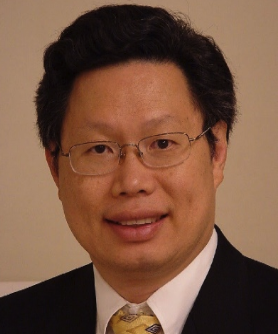
Calton Pu
Professor & John P. Imlay, Jr. Chair in Software Georgia Institute of Technology, USA
Home Page
Calton Pu

Bio: Calton Pu is a Professor and holds the John P. Imlay, Jr. Chair in Software in the College of Computing at the Georgia Institute of Technology, where he also directs the Center for Experimental Research in Computer Systems (CERCS). He received his Ph.D. in computer science and engineering from the University of Washington. His research spans service computing, distributed and cloud computing, systems performance, information security, and dynamic analytics on changing big data. He is a Fellow of IEEE and AAAS, has served as general or program chair of numerous conferences, including ICDE and CIKM, and has served on more than 120 program committees.

KC (Casey) Santosh
Professor of AI; Director, Center of Excellence in Applied Computing; Chair, Department of Computer Systems Engineering Technology; Chair (interim), Department of Applied Computing & Geomatics; Oregon Institute of Technology, USA
Home Page
KC (Casey) Santosh

Bio: KC (Casey) Santosh is a Professor in the new B.S. in Artificial Intelligence program at the Oregon Institute of Technology, where he chairs the Computer Systems Engineering Technology and Applied Computing departments and directs the Center of Excellence in Applied Computing. He previously chaired the Department of Computer Science at the University of South Dakota (2020–2026) and founded its AI Research Lab. He received his Ph.D. in computer science (AI) from INRIA Nancy, France, and was a research fellow at the U.S. National Institutes of Health. His research spans AI for healthcare, medical imaging, explainable AI, and sustainable computing. He has authored 13 books and more than 280 peer-reviewed papers, and is an IEEE Distinguished Lecturer, ACM Distinguished Speaker, and U.S. Department of State speaker on AI.