Keynotes | IEEE TPS 2026

IEEE TPS 2026

The 8th IEEE International Conference on Trust, Privacy and Security in Intelligent Systems, and Applications

Embassy Suites by Hilton Milpitas Silicon Valley, Nov. 4-6, 2026, San Jose, CA, USA

Co-located with IEEE CIC 2026, IEEE CogMI 2026, IEEE RISC 2026.

Day 1: Nov. 4th

Title: Beyond Intelligence: Engineering AGI That Can Reason, Recover, and Reconsider

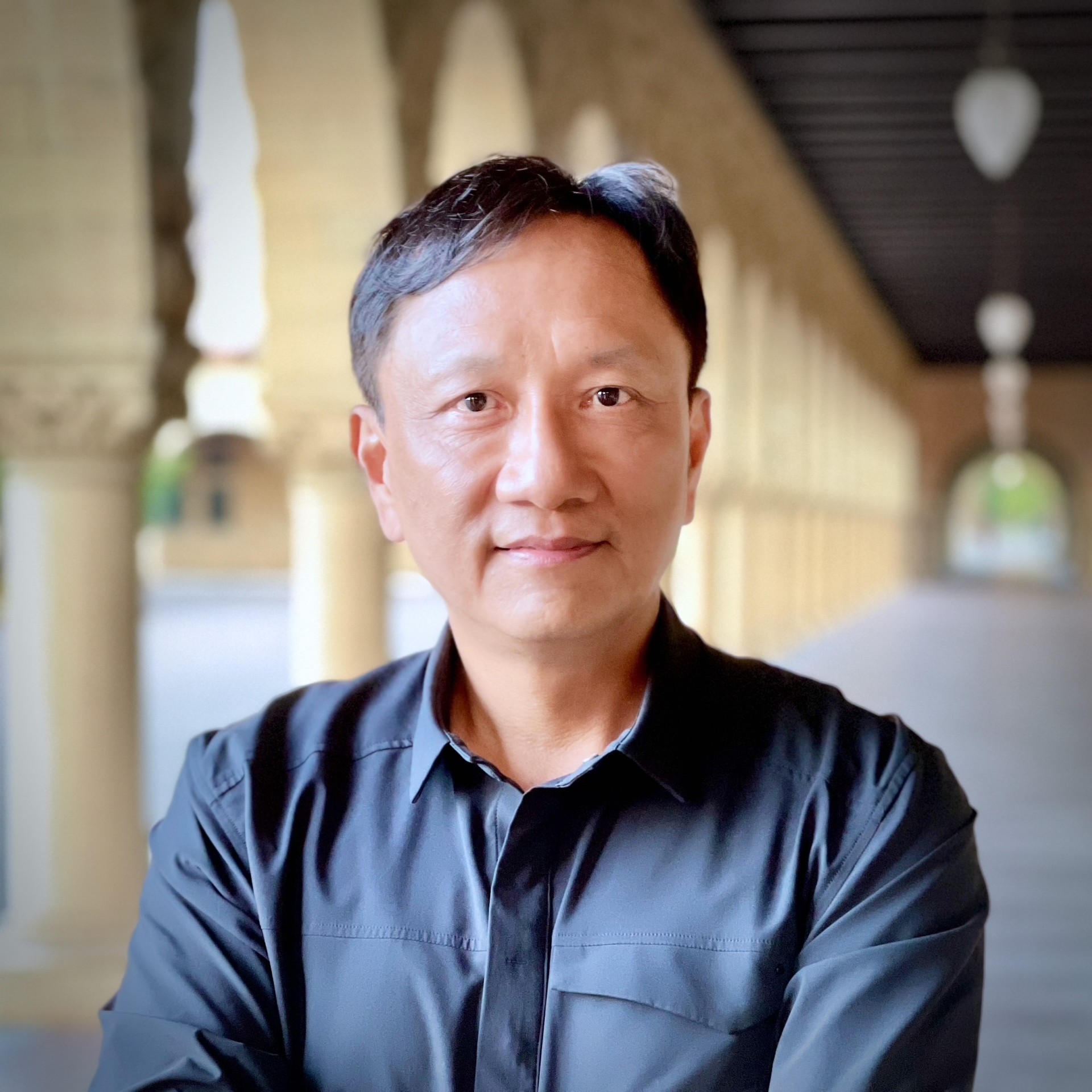
Edward Y. Chang
Founder and CEO, QuadriumAI, USA Advisor, Clinical Mind AI Lab, Stanford University
Home Page
Day/Time for Keynote Speech: Nov. 4

Abstract: The next generation of AI will not be defined by whether a model can produce a brilliant answer in one turn. It will be defined by whether an intelligent system can pursue long-horizon goals while the world changes, evidence becomes stale, agents disagree, and earlier actions cannot simply be undone. Meeting this challenge requires more than scaling models. It requires a System-2 architecture around them.

This keynote presents a research program connecting three stages on the path to artificial general intelligence: collaborative intelligence, System-2 reasoning, and wisdom. The first two stages are developed in my ACM Books volumes on Multi-LLM Agent Collaborative Intelligence and System-2 Reasoning; the third motivates the forthcoming final volume of the trilogy. Drawing on this program and our recent papers, I will show how multi-agent collaboration can be made operational through durable memory and transactional execution; how untrusted generative proposals can be independently validated, admitted, and locally repaired; how world-model predictions can be treated as auditable materialized views rather than self-validating truth; and how causal evaluation can distinguish genuine reasoning from answers that are correct for the wrong reasons.

Together, these systems point toward a common architecture built from semantic anchoring, independent validation, persistent state, bounded recovery, replayable provenance, and checks and balances. They also expose the limit of intelligence understood solely as optimizing a fixed objective. Wisdom begins when a system can reconsider the objective itself across longer temporal horizons, wider relational boundaries, and decisions with irreversible consequences.

I will argue that the path from today’s language models to operational AGI, and eventually to wisdom-oriented AI, lies not in a single larger model but in an auditable and adaptive system that knows what it may commit to, what it must verify, how it should recover, and when it ought to reconsider.

Related Books and Papers:

Edward Y. Chang

Bio: Edward Y. Chang is founder and CEO of SocraSynth, an AGI startup established at Stanford University in 2023. From 2019 to 2026 he served as Adjunct Professor of Computer Science at Stanford, directing AGI research and teaching reasoning, planning, and collaborative intelligence for AGI; he remains affiliated with Stanford as a Faculty Advisor in Clinical AI at the Graduate Schools of Business and Education and an invited guest lecturer. Since December 2025, he has served as Co-Editor-in-Chief of ACM Books. He is a Fellow of both ACM and IEEE, recognized for contributions to scalable machine learning and healthcare AI.

Chang has spent more than two decades engineering AI systems at three frontiers: scalable data-centric machine learning infrastructure adopted by industry and the open-source community; deployed healthcare AI honored with the Qualcomm Tricorder XPRIZE; and multi-agent System-2 architectures that unify his work on data quality, causal grounding, persistent memory, and collaborative intelligence into a framework for AGI. In Foundations of Large-Scale Multimedia Information Management and Retrieval (Springer, 2011), he argued for the primacy of data quality over model complexity, anticipating the data-centric AI movement by more than a decade. In The Path to AGI, Volume 1: Multi-LLM Agent Collaborative Intelligence (ACM Books, 2025) and Volume 2: The Quadrivium: A System-2 Architecture from AGI to ASI (ACM Books, 2026), he develops this thesis into a layered architecture for System-2 reasoning in multi-agent LLM systems. A third volume, Beyond Intelligence: From Operational AGI to Wisdom, is planned for 2027.

Additional honors include the NSF CAREER Award, the ACM SIGMM Test of Time Award for the 2001 paper Active Learning for Image Retrieval (awarded in 2020), and the Google Innovation Award. Before industry, Chang held a faculty appointment at UC Santa Barbara from 1999 to 2006, where he rose from assistant to full professor of computer science in six and a half years.

He holds a Ph.D. in Electrical Engineering and an M.S. in Computer Science from Stanford University, and an M.S. in Industrial Engineering and Operations Research from UC Berkeley.


Day 2: Nov. 5th

Title: Medical Device and Healthcare Cybersecurity: The First 178 Years

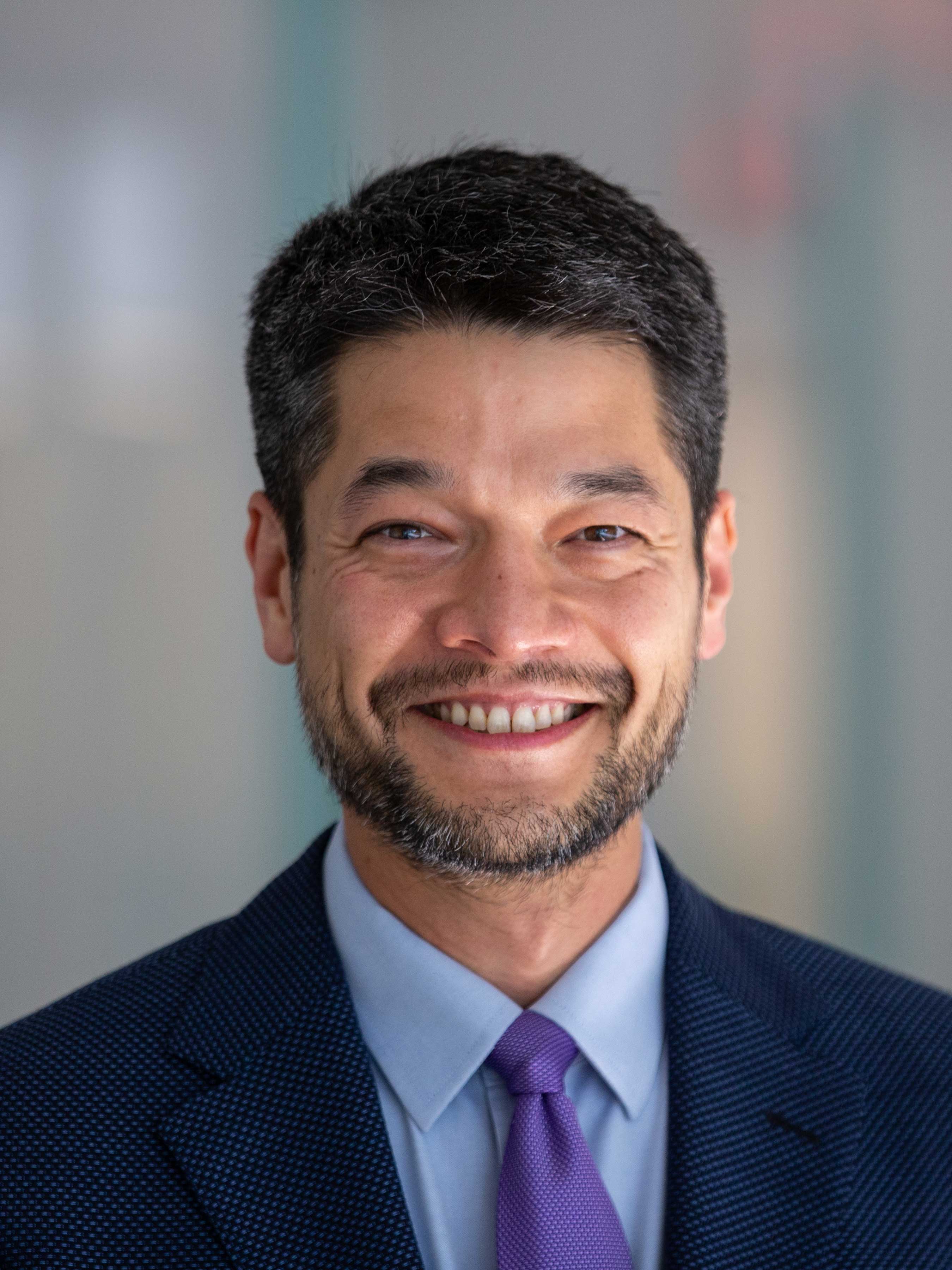
Kevin Fu
Professor, Northeastern University, USA Director, Archimedes Center for Healthcare and Medical Device Cybersecurity, USA
Home Page
Day/Time for Keynote Speech: Nov. 5

Abstract: In 2012, I gave a talk on the first 164 years of medical device security, dating the field, somewhat mischievously, to Ignaz Semmelweis and the realization that healthcare itself can be a vector for harm. Fourteen years later, medical device cybersecurity has grown from an obscure research problem into a highly interdisciplinary engineering subdiscipline shaped by medical device design, the practice of medicine, vulnerability disclosure, security standards, regulatory expectations, supply-chain risk, law, and more.

This talk looks back at nearly two decades of research on the security of medical devices and healthcare systems, including work from my lab and collaborators, from early research on implantable cardiac devices to more recent research on whole hospital simulation. Along the way, I will examine what this research taught us about threat modeling, trustworthy medical device design, postmarket vulnerability management, and the sometimes uncomfortable relationship between safety and security.

Today, the research problem is expanding from the security of individual devices to the security and resilience of entire healthcare delivery environments. I will discuss our work on the $19M ARPA-H funded PATCH program, a multi-organization effort developing technologies to enable hospitals to identify, test, and deploy cybersecurity mitigations for medical devices and other clinical systems without disrupting patient care. This work includes whole hospital simulation, bringing real medical devices, clinical networks, hospital IT, and cyber-physical systems together in realistic healthcare environments where researchers can study attacks and defenses without putting patients at risk. Such environments allow us to ask questions that cannot be answered by testing a pacemaker, infusion pump, or server in isolation: how attacks propagate across interconnected clinical systems, how failures affect healthcare delivery, and how hospitals can continue to provide care during cyber incidents.

The next generation of healthcare will be more connected, more autonomous, and increasingly dependent on AI, complex sensors, and software supply chains. The first 178 years of medical device cybersecurity offer lessons for how we study and build security, resilience, and trust at the scale of both the medical device and the hospital before the next class of failures makes you wanna cry.

Kevin Fu

Bio: Kevin Fu is Professor of Electrical & Computer Engineering, the Khoury College of Computer Sciences, and Bioengineering at Northeastern University in Boston. His research lab focuses on analog cybersecurity—how to model and defend against threats to the physics of computation and sensing. His research led to a decade of revolutionary improvements at medical device manufacturers, global regulators, and international healthcare safety standards bodies. He published widely on medical device security, healthcare ransomware, automobile cybersecurity, RFID security and privacy, secure content distribution, and web security.

Fu served as the inaugural Acting Director of Medical Device Cybersecurity at U.S. FDA’s Center for Devices and Radiological Health (CDRH) and Program Director for Cybersecurity at the Digital Health Center of Excellence (DHCoE).

Fu has testified in the House and Senate on matters of information security and was commissioned by the National Academy of Medicine to publish a report on trustworthy medical device software. He served as the co-chair of the AAMI cybersecurity working group to create the first FDA-recognized consensus standards to improve the security of medical device manufacturing. He co-founded the N95decon.org team for emergency reuse decontamination of N95 masks during pandemic shortages. Fu received his B.S., M.Eng., and Ph.D. from MIT.


Day 3: Nov. 6th

Title: From Papers to Knowledge: Building Knowledge Graphs from Technical Literature

Craig Knoblock
Keston Executive Director, USC Information Sciences Institute (ISI), USA; Research Professor, University of Southern California, USA
Home Page
Day/Time for Keynote Speech: Nov. 6

Abstract: Scientific progress increasingly depends not only on producing new results, but also on making existing results computable. Yet much of the world’s scientific and technical knowledge remains trapped in PDFs, tables, figures, footnotes, and supplementary files. Extracting this information requires more than finding text and numbers: a system must interpret units, methods, naming conventions, missing-value semantics, and relationships that are often specific to a scientific field.

In this talk, I will describe our work on automatically compiling structured knowledge from large collections of technical publications. I will present ArticleMiner, an ontology-guided pipeline that combines document parsing, large language models, normalization, validation, provenance tracking, and knowledge-graph construction. Its central idea is to use domain knowledge while interpreting a publication—not merely after extraction—so that the resulting data preserves the scientific meaning of the source material. The approach has been evaluated across multiple domains, including drug discovery, materials science, machine learning, and mineral geochemistry.

I will focus on an application involving critical minerals, where we are extracting detailed geochemical and mineral-resource data from scientific articles. This work is in collaboration with the US Geological Survey and builds on our previous work with USGS to integrate information from maps, databases, historical mining reports, and spreadsheets into a comprehensive global knowledge graph on critical minerals. Together, these efforts illustrate a broader research agenda: developing systems that can read heterogeneous technical sources, reconcile their contents, and transform the scientific record into reliable, queryable knowledge.

Craig Knoblock

Bio: Craig Knoblock is a Distinguished Principal Scientist at USC’s Information Sciences Institute and a Research Professor of Computer Science and Spatial Sciences at USC. He received his Ph.D. in computer science from Carnegie Mellon University. His research focuses on data integration, information extraction, semantic modeling, and knowledge-graph construction. He has published more than 400 papers and book chapters, and his work has received seven best-paper awards. Dr. Knoblock is a Fellow of AAAI, ACM, and IEEE, a past president of IJCAI, and a recipient of the Robert S. Engelmore Memorial Award.


Title: Billions of Personal Agents vs. AGI: Which Future Wins?

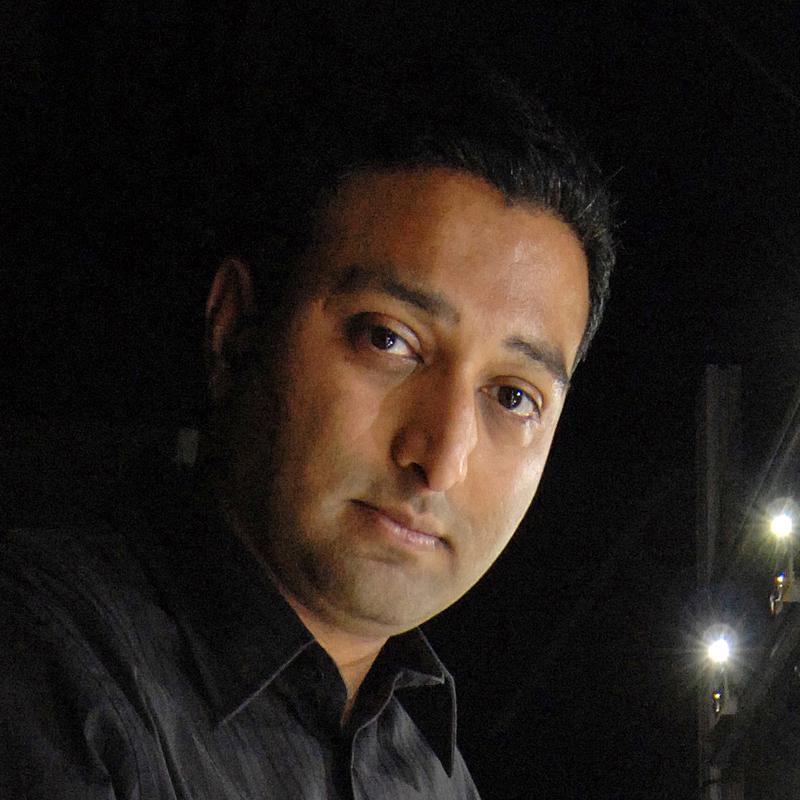
Ramesh Raskar
Associate Professor, MIT Media Lab, USA
Home Page
Day/Time for Keynote Speech: TBA

Abstract: Are we inevitably headed toward a single general intelligence—or toward a bazaar of billions of personal agents? Edge AI, open-weight models, tiny models, and increasingly capable personal agents point to a very different trajectory: intelligence distributed across people, devices, organizations, and communities—where individuals can train, own, adapt, and control their own AI.

The future may not be one ever-larger intelligence. It may be billions of specialized, interoperable, locally grounded agents interacting with one another.

The bigger question is not simply how intelligent AI becomes, but where that intelligence lives, who controls it, and whether the future looks more like a centralized factory—or an open bazaar of intelligence.

The talk will cover how the NANDA (Networked AI Agents in a Decentralized Architecture) at MIT (https://nanda.media.mit.edu) is making progress on research problems such as Knowledge pricing, co-learning, agent eigen-skills and research sandboxes for evaluating emergent behavior of heterogenous agents (https://nandatown.projectnanda.org)

Ramesh Raskar

Bio: Ramesh Raskar is an Associate Professor at MIT, leading pioneering research at the intersection of distributed AI agent architectures, health technology, and computational imaging. As a founding architect of NANDA, he focuses on agentic web infrastructure that empowers decentralized decision-making in complex systems. He received the National Academy of Inventors award (2024), Lemelson Award (2016) and ACM SIGGRAPH Achievement Award (2017). He has worked on special research projects at Google [X], Apple and Facebook and co-founded/advised several companies. He holds 100+ US patents.